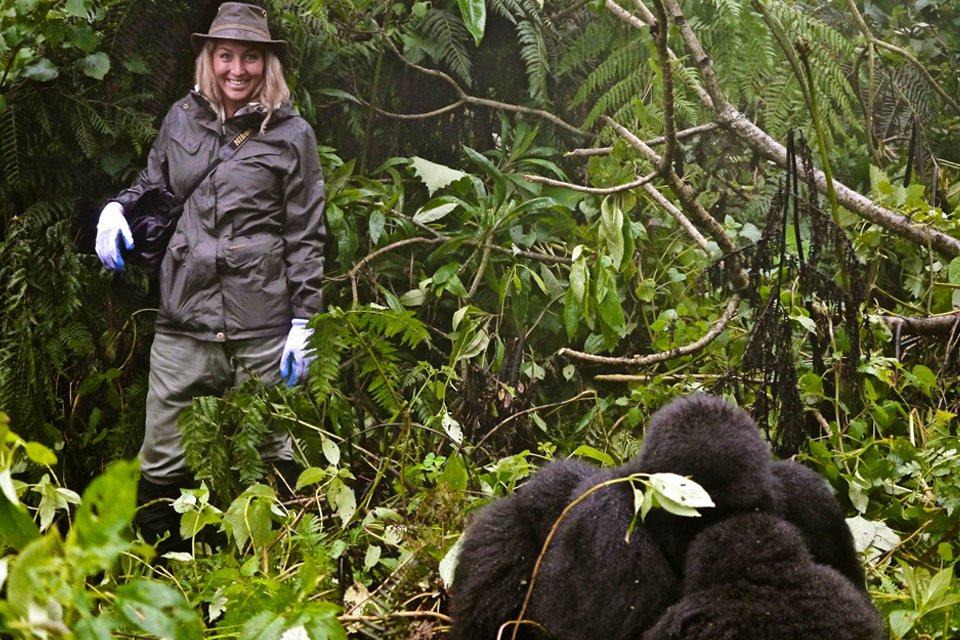
Choosing the right clothing and trekking shoes is essential when preparing for gorilla trekking in Uganda and Rwanda.
Bwindi Impenetrable National Park and Volcanoes National Park present steep terrain, dense forest, mud, rain, and high humidity.
Without proper gear, even a well-organized trek can become uncomfortable and physically demanding.
Correct clothing and footwear make gorilla trekking in Uganda and Rwanda safer, smoother, and far more enjoyable.
The right attire protects against weather, vegetation, and uneven ground while maintaining comfort over several trekking hours.
Preparation ensures the experience remains focused on gorilla encounters rather than physical discomfort.
Best Trekking Shoes for Gorilla Trekking in Uganda and Rwanda
Waterproof hiking boots with strong ankle support are absolutely essential for gorilla trekking in Uganda and Rwanda.
Trails are uneven, muddy, and filled with roots, rocks, vines, and slippery slopes.
Ordinary sports shoes lack grip and stability, increasing the risk of injury.
Quality hiking boots should have deep tread, stiff soles, and reinforced toes.
Waterproofing is crucial because rain can fall unexpectedly throughout the year.
Even during dry seasons, forest trails often remain wet.
Boots must be broken in before travel to prevent blisters during long treks.
Paired with moisture-wicking hiking socks, boots form the foundation of a comfortable trek.
Gaiters and Lower-Leg Protection
Gaiters are highly recommended for gorilla trekking in Uganda and Rwanda.
They prevent mud, stones, insects, and water from entering boots.
Gaiters also protect legs from stinging nettles and thorny vegetation.
This is especially important in Bwindi’s dense and ancient forest.
After rain, gaiters help keep trousers dry and clean.
They significantly improve comfort during challenging trekking conditions.
Proper Clothing for Gorilla Trekking in Uganda and Rwanda
Long-sleeved shirts and long trousers are strongly recommended for gorilla trekking in Uganda and Rwanda.
These protect against scratches, insect bites, and direct contact with vegetation.
Choose lightweight, breathable, and quick-dry fabrics rather than heavy cotton.
Synthetic materials wick moisture and regulate body temperature effectively.
Convertible trekking pants offer flexibility as temperatures change.
They adapt well to varying weather and physical exertion levels.
Neutral colors such as green, brown, and gray help blend into the forest.
Bright colors are discouraged as they may distract wildlife.
Layering for Changing Forest Conditions
Layering is essential due to fluctuating temperatures in gorilla trekking regions.
Early mornings are often cold, especially at higher elevations.
Begin with a moisture-wicking base layer for sweat management.
Add a light fleece or insulating layer for warmth.
A waterproof outer layer is absolutely necessary.
Rain showers can begin suddenly and last without warning.
High-quality rain jackets with sealed seams and ventilation are ideal.
They keep trekkers dry while allowing heat to escape.
Hand, Head, and Body Protection
Lightweight gardening or hiking gloves are extremely useful during gorilla trekking in Uganda and Rwanda.
They protect hands when gripping vines, branches, and rocks for balance.
Many trekkers find gloves unexpectedly essential on steep terrain.
They prevent blisters, cuts, and scratches.
A wide-brimmed hat or cap protects from sun, drizzle, and insects.
Early-morning cold may also require a light beanie.
Sunglasses are useful in open areas but less needed under forest canopy.
They can still help during transfers and clearings.
Essential Accessories for Gorilla Trekking
A waterproof daypack with padded straps is highly recommended.
It protects water, snacks, cameras, and personal items from rain.
A poncho serves as a useful backup during heavy rainfall.
It adds an extra layer of protection.
High-energy snacks and sufficient drinking water are essential.
Trekking can last several hours depending on gorilla location.
Why Proper Clothing Matters for Gorilla Trekking in Uganda and Rwanda
Correct clothing transforms challenging forest terrain into an exciting adventure.
It allows trekkers to move confidently and safely.
Comfort improves focus, endurance, and overall enjoyment.
Therefore, preparation directly impacts the quality of the experience.
With the right gear, gorilla trekking in Uganda and Rwanda becomes smoother and more memorable.
Attention stays on the gorillas rather than discomfort.
Conclusion: Dress Right for Gorilla Trekking in Uganda and Rwanda
In conclusion, proper shoes and clothing are critical for successful gorilla trekking in Uganda and Rwanda.
Waterproof boots, protective clothing, layering, and accessories ensure comfort and safety.
Well-prepared trekkers enjoy the forest rather than struggle against it.
Ultimately, the right attire helps create unforgettable gorilla trekking experiences.