
How Early Morning Mountain Weather Affects Gorilla Trek Viewing Quality in Rwanda
Early morning weather conditions in Rwanda’s Volcanoes National Park play an essential role in shaping the quality, ease, and emotional impact of a gorilla trekking experience. Because Rwanda’s mountain gorillas inhabit a high-altitude volcanic region, the early morning hours present a mix of crisp air, swirling mist, soft clouds, and gentle sunlight—an atmosphere that many trekkers describe as magical. While gorilla trekking in Uganda also begins in the morning, the microclimates of Bwindi Impenetrable Forest and Mgahinga are quite different, largely due to Uganda’s dense rainforest vegetation and more tropical humidity. Understanding how Rwanda’s early mountain weather influences visibility, trail conditions, gorilla behavior, and photography helps travelers prepare for an enriching and unforgettable trek.
The first advantage of early morning weather in Rwanda is the cool, refreshing temperature. Volcanoes National Park lies between 2,400 and 4,500 meters above sea level, meaning mornings are often cold but comfortable for hiking. Temperatures typically range between 8°C and 15°C during the early hours. This cool, crisp air is ideal for trekking, especially compared to the warm, humid conditions that sometimes accompany gorilla trekking in Uganda’s low-elevation rainforest areas. Hikers exert less energy, sweat less, and often feel more energized as they ascend through the bamboo forests and into the foothills of the Virunga Volcanoes.
Another defining characteristic of early mornings in Rwanda is the presence of mist and soft mountain fog. This mist often blankets the slopes of Mount Sabyinyo, Gahinga, Karisimbi, and Bisoke, creating an ethereal backdrop that enhances the emotional quality of the trek. As trekkers move deeper into the forest, the mist weaves between the bamboo stems, filtering sunlight and creating a mystical ambiance. While this mist adds beauty, it also affects visibility in subtle ways. Fortunately, because Rwanda’s forests are relatively open compared to the thick undergrowth encountered during gorilla trekking in Uganda, guides and trekkers can still navigate easily through the terrain.
The early morning mist can also make photography exceptionally beautiful. Soft diffused light eliminates harsh shadows and highlights the gorillas’ facial details, fur texture, and expressive eyes. Amateur photographers and professionals alike treasure these conditions because early morning shots often appear more dramatic and emotionally evocative. Travelers who have trekked gorillas in Uganda often comment that Rwanda’s mountain mist provides superior photographic opportunities, especially when gorillas emerge through the glowing fog or sit in open clearings framed by volcanic silhouettes.
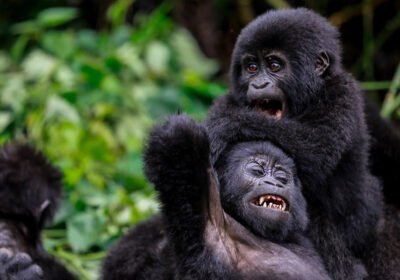
Morning weather also influences gorilla behavior, often in predictable ways. Mountain gorillas tend to wake up early, usually between 6:00 and 7:00 am, just before trekking groups begin their journey. In the early hours, gorillas are typically calm, relaxed, and focused on feeding. The cool mountain climate encourages them to feed slowly on bamboo shoots, wild celery, vines, and thistles. Because rainfall or midday heat has not yet set in, gorillas often remain close to their nesting areas during the morning, making them easier for trackers to locate. In contrast, during gorilla trekking in Uganda, the dense rainforest environment may cause gorillas to move deeper into the forest earlier in the day to find food or avoid heat, making the trek longer or more physically demanding.
Early morning weather also affects trail stability. Overnight dew or early drizzle can make Rwanda’s volcanic soil slippery, especially on steep slopes. However, the moderate elevation gradients and open bamboo zones provide generally stable footing. Rangers carefully select the safest paths depending on weather, adjusting routes to avoid slick areas. Porters are especially valuable during early morning treks, assisting trekkers with balance and stability—a service equally recommended during uganda gorilla trekking experiences, where trails can be wetter and more unpredictable.
The cloud patterns common in Rwanda’s early hours also enhance visibility. Clouds often sit high above the forest canopy in the morning, providing filtered light without dimming the landscape. As the sun rises, rays pierce through the mist, gradually illuminating the forest floor. This “golden mist” effect—unique to mountainous regions—creates breathtaking scenes of gorillas feeding, grooming, or interacting in soft light. Compared to Uganda’s rainforest, where thick canopies block much of the early sun, Rwanda’s forests allow more light penetration, improving visibility and enhancing the quality of the viewing experience.
Another interesting factor is crowd timing and group movement. Because all Rwanda gorilla treks begin early in the morning and are tightly coordinated from the Kinigi Park Headquarters, the weather’s predictability helps rangers plan group assignments effectively. They know that mornings are the best time to catch gorillas in calm, accessible areas before they begin moving farther or resting in denser vegetation. Meanwhile, gorilla trekking in Uganda sometimes involves early morning fog that is much thicker due to Bwindi’s altitude and density, occasionally delaying visibility or extending trek duration.
As the morning progresses, the weather may shift. Clouds begin to break, revealing sweeping views of volcanic peaks. In Rwanda, this transition from mist to clear skies often aligns perfectly with the timing of reaching the gorilla family, creating breathtaking photographic opportunities. Trekkers may witness gorillas sunbathing, juveniles playing under emerging light, or silverbacks displaying dominance in open clearings framed by mountain ridges.
In conclusion, early morning mountain weather plays a transformative role in shaping the quality of gorilla trekking in Rwanda. The cool temperatures, mystical mist, gentle sunlight, and steady visibility create a uniquely atmospheric and emotionally powerful trekking environment. These weather patterns enhance photography, improve comfort, and influence gorilla behavior in predictable ways that benefit trekkers. Whether compared with or combined with gorilla trekking in Uganda, Rwanda’s early morning mountain weather elevates the entire experience, making each encounter feel intimate, cinematic, and deeply memorable.