





Navigating the “Impenetrable”: Difficulty Levels and Preparation

As of February 2026, uganda gorilla trekking remains one of the most physically demanding yet rewarding wildlife experiences on the planet. The difficulty is not uniform; it is a dynamic equation involving Bwindi’s varying sectors, the unpredictable movement of gorilla families, and the unique challenges of a triple-canopy rainforest.
Difficulty by Sector: Choosing Your Challenge
In 2026, the four sectors of Bwindi Impenetrable National Park continue to offer distinct difficulty profiles. Selecting the right sector is the most effective way to align the trek with your fitness level.
| Sector | Difficulty Rating | Key Characteristics |
| Buhoma | Moderate | The most accessible sector with gentler slopes and generally shorter treks. Ideal for first-timers or those with moderate fitness. |
| Ruhija | Moderate to Hard | Features high-altitude ridges (up to 2,500m). While scenic, the thinner air can make even short hikes feel strenuous. |
| Rushaga | Challenging | Known for steep valleys and deep ridges. It offers the most gorilla families but requires significant leg strength and endurance. |
| Nkuringo | Difficult | Often cited as the toughest sector. Treks usually begin with a steep descent and end with a grueling uphill climb back to the park headquarters. |
Note: Mgahinga Gorilla National Park is often rated as Moderate. Its bamboo forests are more open than Bwindi’s dense jungle, though the volcanic slopes can still be steep.
Environmental Factors: Beyond the Slope
Even a “short” trek can become difficult depending on two external variables:
- Weather: In 2026, the traditional dry seasons (June–August and December–February) remain the preferred windows. During the wet seasons (March–May and October–November), trails become extremely slippery, and the “impenetrable” vegetation grows thicker, requiring more physical effort to navigate.
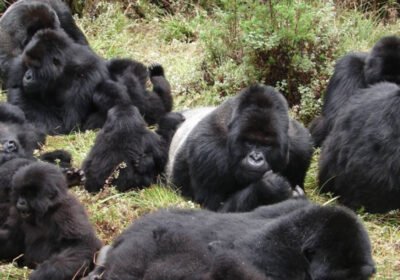
- Gorilla Movement: Gorillas are wild and move daily for food. You may find them in 45 minutes or after 7 hours of tracking. Mental stamina is just as important as physical fitness when the trek extends into the late afternoon.
2026 Fitness and Preparation Tips
You do not need to be a marathon runner, but you should be “mountain fit.” Professional guides in 2026 recommend starting a preparation routine 6–8 weeks before your trip:
- Cardio: Focus on incline walking or stair climbing to simulate the constant elevation changes of the forest.
- Support Systems: Hiring a porter ($20–$25 USD) is the single best way to reduce the trek’s difficulty. They assist with balance on slippery sections and carry your heavy camera gear.
- The “Sedan Chair” Option: For travelers with significant mobility challenges or the elderly, “helicopter” stretchers (sedan chairs) carried by porters are available in Bwindi, ensuring the experience is inclusive for all.