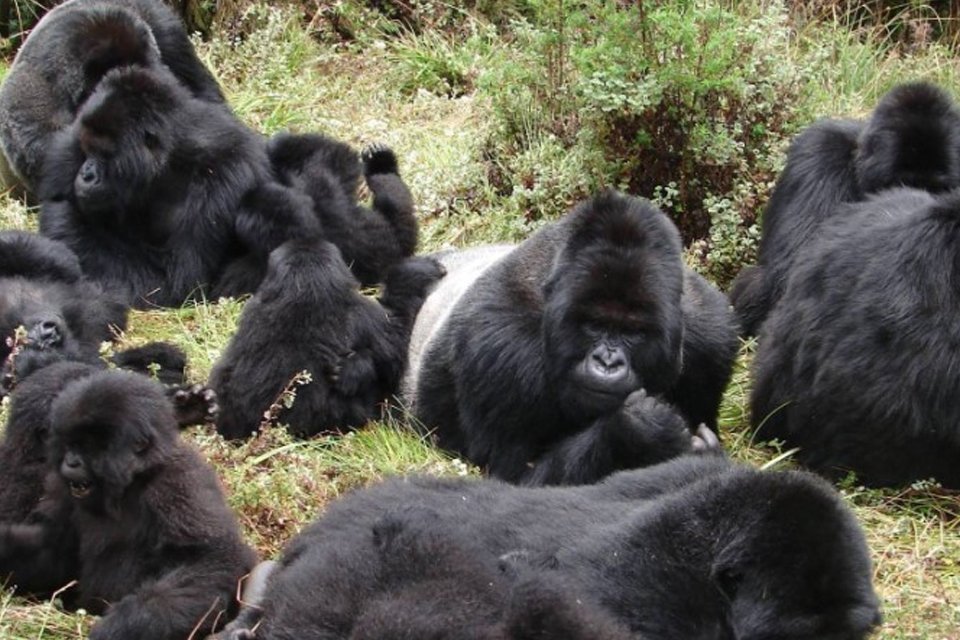
The Nshongi Gorilla Family is one of the most famous and historically significant gorilla groups in Bwindi Impenetrable National Park and has played a major role in shaping gorilla trekking in Uganda. Located in the Rushaga sector, Nshongi once held the distinction of being the largest known habituated mountain gorilla family in the world, making it an icon of uganda gorilla trekking and a symbol of successful conservation. For travelers interested in gorilla family history, leadership dynamics, and social complexity, trekking the Nshongi lineage offers exceptional insight into gorilla society.
The Nshongi family gained international recognition due to its extraordinary size, at one point comprising more than 30 individuals. This unusually large number was the result of strong leadership, high reproductive success, and long-term stability under a dominant silverback. The family’s size attracted global attention and helped highlight the effectiveness of gorilla trekking in Uganda as a conservation model that supports population growth and protection.
Leadership within the Nshongi family has always been central to its story. At its peak, the family was led by a powerful and experienced silverback who maintained order among numerous adult males, females, juveniles, and infants. Managing such a large group required constant reinforcement of hierarchy, and visitors trekking this family often witnessed impressive displays of dominance, chest-beating, and vocalizations. These behaviors provided dramatic and educational moments during gorilla trekking in Uganda, showcasing the complexity of mountain gorilla social systems.
As is natural in large gorilla families, internal pressures eventually led to group fragmentation. Over time, several mature silverbacks split from the main Nshongi group to form independent families. These splits gave rise to multiple new gorilla families in the Rushaga sector, expanding the number of habituated groups available for uganda gorilla trekking. While this reduced the size of the original Nshongi family, it significantly strengthened conservation outcomes by increasing overall gorilla numbers and trekking opportunities.
Today, the Nshongi family remains a key part of Bwindi’s gorilla trekking heritage, even as its structure has evolved. The remaining group continues to function as a cohesive family with its own identity and social rhythm. Trekking Nshongi offers visitors a chance to observe a group shaped by history, leadership change, and resilience. This long-term evolution adds depth to the gorilla trekking in Uganda experience, as guides often explain how past events shaped present-day family dynamics.
Trekking to the Nshongi family is generally considered moderate to challenging due to the terrain of the Rushaga sector. Trails often involve steep slopes, dense vegetation, and extended hiking distances depending on daily gorilla movement. This makes uganda gorilla trekking with Nshongi particularly appealing to travelers who enjoy physically engaging treks combined with rich behavioral observation. The effort involved often enhances the sense of reward upon encountering the gorillas.
Behaviorally, the Nshongi gorillas are known for strong group interactions and visible social structure. Visitors may observe grooming chains, playful juveniles, maternal care, and occasional dominance interactions among adult males. These moments provide valuable insight into how large gorilla families manage relationships and maintain cohesion. For travelers interested in understanding gorilla behavior beyond surface-level observation, gorilla trekking in Uganda with the Nshongi family is especially enlightening.
The forest environment surrounding the Nshongi family is typical of southern Bwindi, featuring thick undergrowth, bamboo zones, and rugged terrain. This setting reinforces the wild and untamed character of gorilla trekking in Uganda, reminding visitors that these gorillas live in a truly natural environment. The sense of remoteness and scale in Rushaga enhances the emotional impact of the trek.
From a conservation perspective, the Nshongi family represents both success and transition. Its former size demonstrated the potential for population growth when gorillas are effectively protected. The subsequent family splits reflect healthy natural processes rather than decline, underscoring the importance of understanding gorilla social evolution within uganda gorilla trekking programs.
For photographers, trekking the Nshongi family can be particularly rewarding due to the number of individuals and range of behaviors observed. Larger group size increases opportunities to capture interactions between multiple gorillas, creating rich storytelling images. However, the dynamic nature of the group also requires patience and readiness, as movement can be frequent during encounters.
Emotionally, trekking the Nshongi family often leaves a lasting impression on visitors. Knowing that this group once represented the largest known gorilla family in Bwindi adds a sense of awe and respect to the encounter. Many travelers feel they are witnessing a living chapter of gorilla conservation history during their uganda gorilla trekking experience.
In summary, the Nshongi Gorilla Family is a cornerstone of gorilla trekking in Uganda, known for its former record-breaking size and complex social dynamics. While the family has evolved over time, its legacy continues to influence conservation and tourism in Bwindi. For travelers seeking depth, history, and a powerful understanding of gorilla society, gorilla trekking in Uganda with the Nshongi family offers a compelling and unforgettable experience.