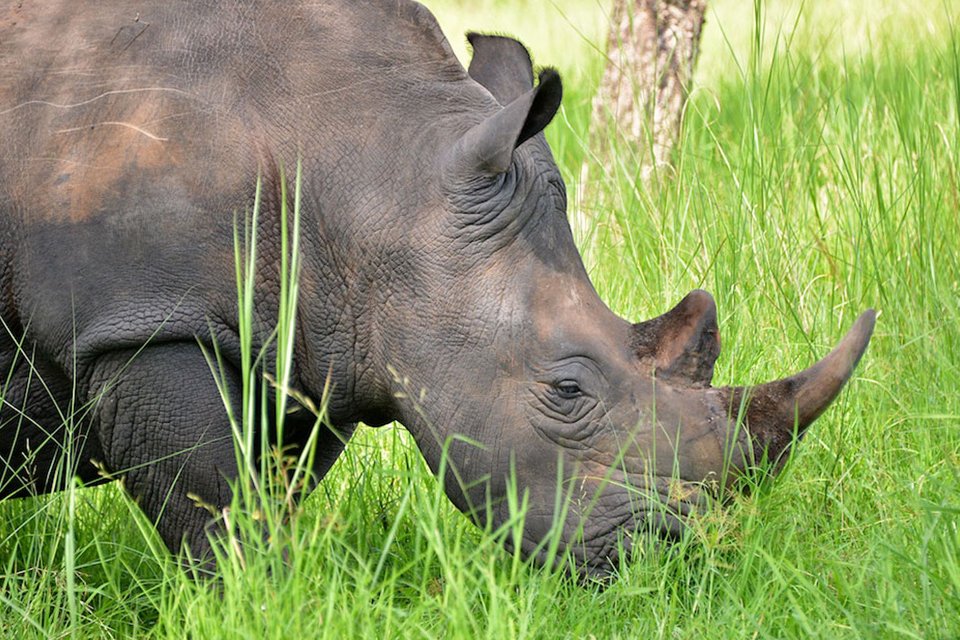
Rhino tracking in Akagera National Park stands among the most meaningful wildlife encounters offered on Rwanda safaris today.
For travelers familiar with gorilla trekking, this safari in Rwanda reveals how conservation success translates into real wildlife recovery.
Unlike traditional game drives, rhino tracking focuses on education, protection, and direct conservation involvement.
Therefore, Rwanda tours featuring this activity deliver depth beyond standard wildlife viewing.
The Return of Rhinos to Rwanda Safaris
White rhinos were reintroduced to Akagera National Park after decades of absence caused by poaching and habitat loss.
This reintroduction marked a major conservation milestone within Rwanda safaris and national wildlife restoration efforts.
Careful planning, international collaboration, and long-term protection strategies ensured successful translocation.
Consequently, rhinos gradually adapted and established stable populations within Akagera’s savanna ecosystem.
Today, their presence completes Rwanda’s Big Five offering and strengthens the appeal of Rwanda tours.
As a result, Akagera has become a flagship destination for savanna safaris in Rwanda.
Joining Conservation Rangers on Rwanda Tours
Rhino tracking allows visitors to accompany experienced conservation rangers actively protecting these endangered animals.
This guided experience transforms a safari in Rwanda into an immersive conservation journey.
The experience begins with an educational briefing explaining rhino behavior, threats, and ongoing protection strategies.
Therefore, visitors gain essential context before entering the field.
Rangers demonstrate tracking techniques, including reading spoor, interpreting movements, and monitoring habitat conditions.
As a result, Rwanda safaris become interactive learning experiences rather than passive observation.
Tracking Rhinos Across Akagera’s Savanna
After the briefing, visitors follow ranger teams across open savanna and woodland landscapes.
This walking component offers a rare opportunity to experience wildlife conservation from ground level.
Tracking focuses on locating rhinos while ensuring minimal disturbance to their natural behavior.
Consequently, Rwanda tours maintain ethical standards while offering authentic encounters.
Rangers continuously assess safety, wind direction, and animal behavior during the tracking process.
Therefore, each safari in Rwanda balances excitement with responsibility.
Respectful and Safe Rhino Encounters
Encounters with rhinos are carefully managed to prioritize animal welfare and visitor safety.
Guests observe from safe distances while rangers interpret movements, postures, and communication signals.
Rather than thrill-seeking, the emphasis remains on understanding conservation challenges and success.
Thus, Rwanda safaris deliver meaningful encounters grounded in respect and awareness.
Visitors often gain a deeper appreciation for the effort required to protect endangered species.
As a result, the experience becomes both educational and emotionally impactful.
The Emotional Impact of Rhino Tracking on Rwanda Safaris
For many travelers, rhino tracking creates a powerful emotional connection to conservation success.
Knowing that rhinos were once extinct in the region adds significance to every sighting.
This awareness transforms a safari in Rwanda into a story of recovery and hope.
Therefore, visitors often describe the experience as one of the most memorable moments of their journey.
Rhino tracking reinforces the idea that conservation investment delivers tangible results.
Consequently, Rwanda tours foster lasting appreciation for wildlife protection efforts.
How Rhino Tracking Supports Conservation in Rwanda
Revenue generated from rhino tracking directly funds protection units, ranger salaries, and advanced surveillance technology.
This funding ensures round-the-clock monitoring and rapid response capabilities.
The model closely mirrors the conservation funding system used in gorilla trekking safaris.
As a result, Rwanda safaris consistently support long-term species protection.
By participating, travelers actively contribute to conservation outcomes rather than passive tourism.
Therefore, each safari in Rwanda becomes part of a broader conservation solution.
Combining Rhino Tracking with Rwanda Tours
Rhino tracking integrates seamlessly into broader Rwanda tours and safari itineraries.
It pairs especially well with gorilla trekking, cultural experiences, and classic game drives.
This combination offers travelers a complete safari in Rwanda across forest and savanna ecosystems.
Consequently, itineraries feel diverse, balanced, and conservation-focused.
For repeat safari travelers, rhino tracking provides a rare experience unavailable in many destinations.
Thus, it elevates Rwanda safaris to a distinctive global standard.
Conclusion: Rhino Tracking as a Highlight of Rwanda Safaris
In conclusion, rhino tracking in Akagera National Park delivers education, inspiration, and deep conservation connection.
It transforms wildlife viewing into a powerful conservation story.
As part of Rwanda safaris, the experience reinforces the country’s leadership in sustainable tourism.
Ultimately, rhino tracking completes the safari in Rwanda by uniting wildlife protection with unforgettable encounters.